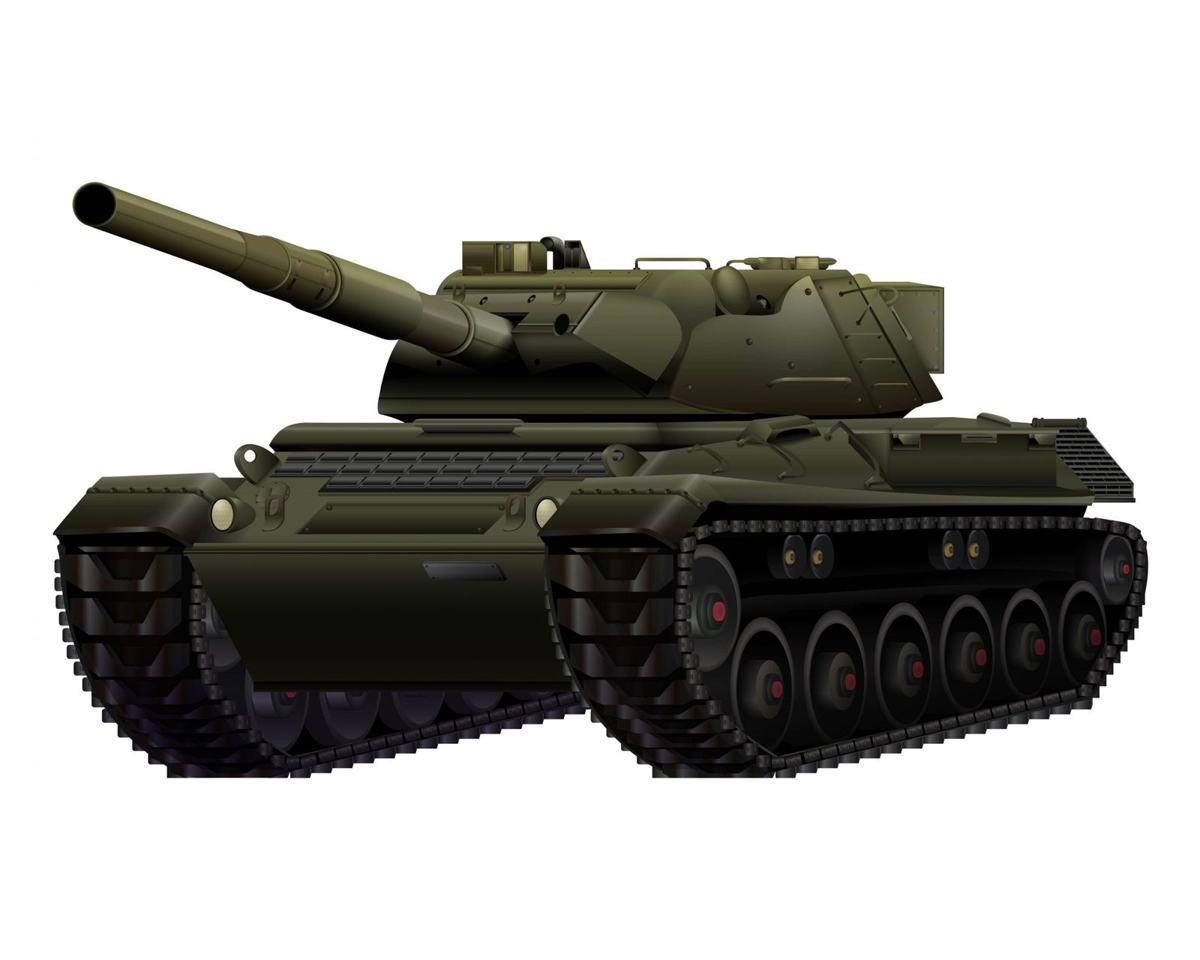
| Leopard 1A5 | Leopard 2A6 | |
|---|---|---|
| In service | 1965 | 1979 (2A6: 2001) |
| Weight | About 42.4 t | 62.3 t |
| Main gun | 105 mm L7A3 rifled | 120 mm L/55 smoothbore |
| Armor | Steel, with spaced turret armor on later versions | Multi-layer composite |
| Engine | 830 hp MTU MB 838 | 1,500 hp MTU MB 873 |
| Power-to-weight | About 19.6 hp/t | About 24 hp/t |
| Top speed | 65 km/h | About 68–70 km/h |
| Crew | 4 | 4 |
| Still produced? | No (ended mid-1980s) | Yes (2A8) |
Different eras, different threats
The Leopard 1 was designed in the late 1950s, when designers believed no practical amount of armor could stop shaped-charge weapons, so they prioritized mobility. By the 1970s composite armor had changed that equation, and the Leopard 2 was designed to survive hits from Soviet tank guns and missiles while staying fast.
Which is better?
The Leopard 2 is better in every combat respect: armor, firepower, sensors and power. The Leopard 1 is lighter, simpler, cheaper to run and still useful for fire support, which is how Ukraine uses its Leopard 1A5s.
How to tell them apart
- Turret shape: the Leopard 1's turret is rounded or sloped; the Leopard 2's is angular and boxy (or wedge-shaped from the 2A5).
- Size: the Leopard 2 is visibly longer, wider and bulkier, with heavy armored skirts over the tracks.
- Gun: the Leopard 1's 105 mm barrel is thinner, with a fume extractor partway along it.
Frequently asked questions
Is the Leopard 2 an upgraded Leopard 1?
No. It is a completely new design with composite armor, a larger gun and a more powerful engine.
Why does Ukraine use Leopard 1s?
They were available in storage and could be refurbished quickly. Ukraine uses them mainly for fire support rather than front-line assaults.